Measuring Rooms but Not Furniture: Why That Backfires
You measured the apartment. The living room is 12 feet by 14 feet, the bedroom is “pretty spacious,” and the dining nook looks like it can handle a small table. So you assume the furniture will fit.
That is how moving day turns into a furniture puzzle: the sofa blocks the doorway, the dresser covers an outlet, or the bed technically fits but leaves no room to open a closet. A room measurement is only half the information you need. Before deciding what to move, buy, or keep, you need the actual furniture dimensions and a plan for getting each item into the apartment and using it once it is there.
As a Houston real estate broker, I have seen plenty of downsizing moves go sideways because people measure the rooms but skip the furniture, building access, or both. My rule is simple: get the doorway width before you start talking about sofas. Then measure the furniture, the route in, and the space each piece needs to function. A tape measure in the car has saved me—and my clients—more than once.
Why Room Measurements Alone Don’t Tell the Whole Story
A room’s length and width tell you how much floor area it has. They do not tell you whether a particular piece can pass through the front door, turn in a hallway, fit between a wall and a radiator, or leave enough clearance to open a drawer.
Even a basic “it fits” check can be misleading. A queen bed may fit inside a bedroom on paper, but the frame, headboard, nightstands, and walking paths all take up space. A sofa may fit against a living-room wall, but its depth could leave too little room to walk through the seating area. And furniture needs space to work, not merely space to sit.

That is where careful layout planning matters. You are not just asking, “Can this item go in this room?” You are asking:
- Can it get through the building entrance, hallway, elevator, and apartment doorway?
- Can it be placed where it belongs without blocking a window, vent, outlet, or walkway?
- Can doors, drawers, recliners, and cabinets open fully?
- Will the room still feel comfortable to move through?
Start with the Apartment—Including the Route In
Before you make furniture decisions, measure the apartment’s rooms and the features that affect how those rooms can be used. Record the measurements rather than relying on memory or a floor plan alone. Floor plans may not show every bump-out, built-in, door swing, or obstruction.
Measure more than the walls
For each room, note the length and width, ceiling height, and locations of doors, windows, closets, and built-ins. Measure from the wall to any obstruction that reduces usable space, such as a radiator, column, kitchen peninsula, or deep window ledge. In a bedroom, measure the closet opening and note how its doors operate. In a living room, look for vents and outlets that furniture should not cover.
Pay special attention to door swing space. A door that opens into the room claims part of the floor area. If a bed, cabinet, or sofa crowds that arc, the door may not open properly—or the room may feel awkward every time someone enters. Check closet doors and bathroom doors, too. A cabinet can fit neatly in a corner and still make a closet unusable.
Check the building route in
A piece that fits in the room can still fail before it gets there. Measure the apartment entry door, the building entrance, hallway pinch points, stair turns, and elevator door and interior dimensions. Ask the building manager about move-in procedures, elevator reservations, loading areas, and any access restrictions. Do not assume an elevator will be available or that a long item can turn inside it.
For a large item, note not only the width and height of openings but also the space available to angle it. A hallway may be wide enough for a dresser to travel straight but too tight for it to turn toward the unit. If you have an unusually bulky piece, check with your movers before moving day rather than discovering the problem at the elevator.
Measure the Furniture—Then Measure How It Works
Write down the actual dimensions of every large item you are considering moving: height, width, and depth. Include projections such as sofa arms, table leaves, bed-frame rails, and feet if they affect the fit. If you no longer have the product listing, measure the item yourself. “About six feet long” is not a reliable planning measurement.
For furniture that opens, extends, or reclines, measure both its closed and open footprint. Record how far a recliner moves from the wall, how much space a dining chair needs when pulled back, and how far drawers extend. The furniture’s everyday operating space can be more important than its footprint when it is pushed against a wall.
Then compare the measurements with your apartment notes. A quick sketch can help: mark the walls, doors, windows, and the dimensions of the furniture. You can use graph paper, a simple digital floor planner, or painter’s tape on the floor to outline a piece’s footprint.
Use a simple fit check
What to check What to measure or confirm Why it matters Room placement Furniture width and depth; usable wall and floor space Confirms the item fits without overwhelming the room Access route Doorways, hallways, stairs, turns, and elevator dimensions Confirms the item can reach the apartment Clearance Door swing space, drawer extension, chair pullback, recline distance Confirms the room will function after the item is placed Building logistics Move-in rules, elevator reservation, loading access, restrictions Prevents avoidable delays and access surprisesIf any measurement is close, treat it as a question to investigate, not a green light. Account for packaging, protective blankets, handles, awkward angles, and the room people need to maneuver the item. When in doubt, ask your movers to review the measurements and route.
Make a Keep, Store, Sell, Donate, or Replace Decision
Once you know what fits, decide what deserves a place in the new home. The goal is not to move every item you own. The goal is to build a home that works for the way you live now.
For each large piece, consider its condition, usefulness, dimensions, replacement cost, and fit with your layout. A sentimental item may deserve a different decision than an uncomfortable chair you have been meaning to replace. But don’t pay to move a bulky item simply because you already own it.
Decision Consider it when… Watch out for… Keep The item fits, is useful, and suits your new layout Keeping it by default without measuring or assessing its condition Store You need time to decide or have a specific future use for it Storage costs adding up for an item you may not use again Sell It has resale value and you can manage the timing Waiting until moving week to list and arrange pickup Donate It is usable and donation pickup or drop-off is practical Assuming every organization accepts every type of furniture Replace The item is damaged, poorly scaled, or unsuitable for the new home Buying a replacement before you have measured and settled in“Store” can be a sensible short-term choice if you are genuinely unsure, but set a date to revisit the decision. Storage is not a free holding pattern. If the item is unlikely to earn its space—or its storage cost—consider selling or donating it instead.
Replacing furniture may also make sense, but it is often smarter to wait until you are in the apartment. Live with the layout first. You will get a better feel for how you use the space, where you need storage, and what scale actually works. Buying a new sofa before the move may leave you with the same problem as the old one—only with a new receipt.
Scale and Visual Weight Matter in Small Rooms
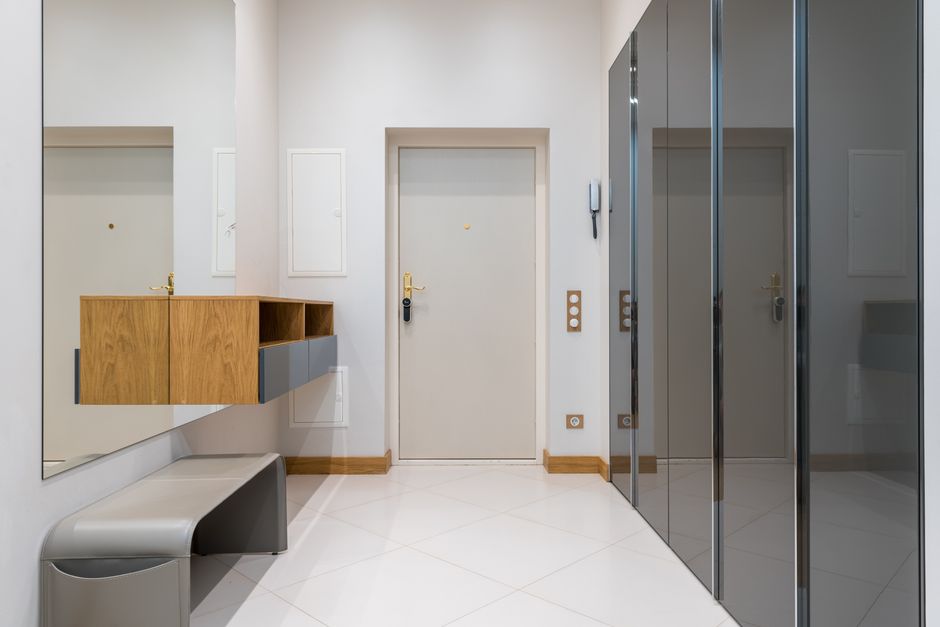
Physical fit is not the same as visual fit. In a smaller apartment, a piece can technically fit and still make the room feel crowded. That is often a matter moving couch around corner of scale and visual weight.
Scale is how the furniture’s dimensions relate to the room and to the other pieces. A deep, bulky sofa may take up much of a narrow living room, even if it leaves a walkway. A tall bookcase can dominate a https://smoothdecorator.com/my-dining-table-fits-through-the-door-but-leaves-no-space-to-walk/ low-ceilinged room. Several small pieces can also create clutter, while one appropriately sized piece may make the same room feel calmer.
Visual weight is how heavy or substantial an item appears. Dark upholstery, thick arms, solid bases, and tall backs can make furniture feel larger. Open legs, lighter colors, glass surfaces, and lower profiles can make a room feel more open. These are not strict rules; comfort and function matter, too. But they are useful when two pieces have similar dimensions and you are deciding which one will sit better in a small space.
Think about the whole room rather than evaluating each item separately. If a large sofa stays, perhaps the coffee table can be smaller or visually lighter. If the bedroom has limited floor space, a bed with built-in storage may do more work than a separate chest. A compact dining table that extends for guests may be more useful than a permanently oversized table.
A Practical Order for Downsizing Furniture
Use this sequence before moving day:
- Measure the apartment. Record rooms, doorways, closets, windows, obstructions, and door swings.
- Check the route in. Measure building access, hallways, stairs, and elevator dimensions; confirm move-in rules.
- Measure your furniture. Include height, width, depth, and the operating space needed for doors, drawers, chairs, or recliners.
- Sketch the layout. Place the largest pieces first and protect clear paths through the room.
- Choose keep, store, sell, donate, or replace. Base the decision on actual fit and usefulness, not ownership alone.
- Wait on new purchases when you can. Move in, test the layout, and then shop for what the space truly needs.
Measure First, Move With Fewer Surprises
Measuring rooms without measuring furniture is an incomplete plan. It can lead to extra moving costs, access problems, awkward layouts, and furniture that occupies space without making the apartment more comfortable.
Start with the apartment, including door swing space and the route in. Then record the actual furniture dimensions and plan how each piece will function in the room. Finally, decide whether to keep, store, sell, donate, or replace it. A few careful measurements can prevent a lot of last-minute improvising—and help you move only the pieces that genuinely belong in your next home.